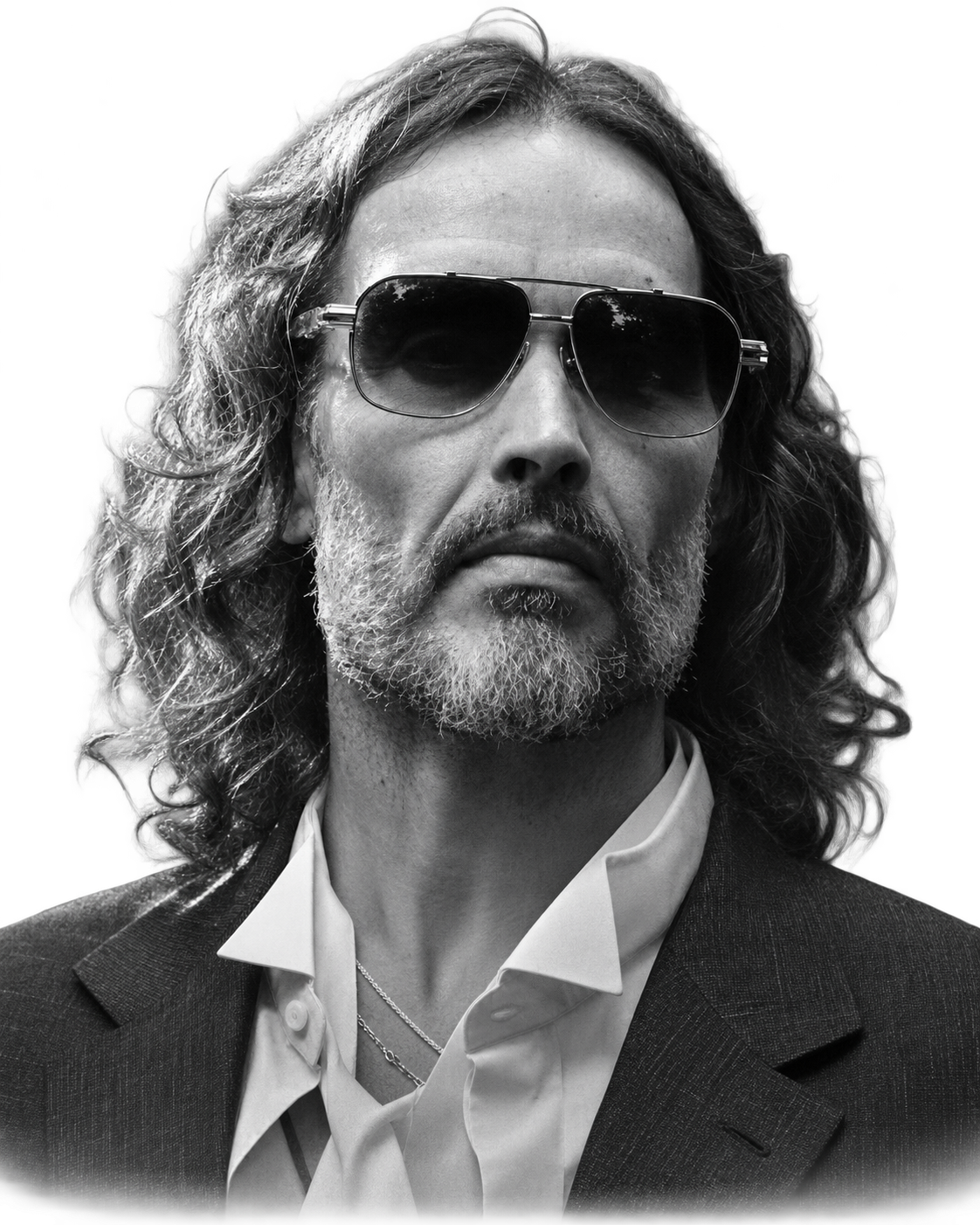
Our opinion
A verdict matters.
So does examining it.
We call for Russell Brand’s release through lawful process. We support a properly evidenced challenge to his conviction and fair consideration of any application for release.
Our central concern is the ability to test an allegation after many years. A person’s liberty should depend on evidence that withstands scrutiny, with proper weight given to any disadvantage caused by missing material. If that disadvantage makes a conviction unsafe, it must be put right.
This is a demand for reliable proof and a meaningful defence. We do not argue that a person forfeits the right to report an assault by waiting, or that every case requires a surviving text message. The question is what the evidence in this case could reliably establish.
Our questions arise from arguments actually raised by his defence: the influence of publicity, the reliability of recollections, disputed accounts of consent, and the risk of judging a person’s reputation instead of the alleged acts.
Read the defence.
Test its arguments.
Follow the evidence.
These are reasons to examine the case closely. They are not proof that the jury was wrong. Our call for release is a supporter position; we have not established that the conviction is unsafe.
This statement draws on public court reporting, not the complete trial record. We will correct errors, acknowledge evidence against our position and distinguish a defence submission from a finding of fact.
The public record · As at 7 November 2026
What the jury decided.
On 5 November, Brand was convicted of one rape and three sexual assaults. He was acquitted of two other rape charges and attempted indecent assault. The rape conviction concerns the 2009 encounter at his home.
His bail was revoked. He is in custody, with sentencing scheduled for Monday 9 November. Brand denied the offences.
Why we question the case
The specific arguments.
01 / Delay and the ability to defend
What police confirmed. The Metropolitan Police say no CCTV or forensic evidence was available and that the passage of time limited digital enquiries. That establishes an investigative limitation. It does not establish that a particular recording or forensic sample once existed and was lost, or what it would have shown.
What remains unverified. ABC reports that jurors heard the woman’s recollection of a text exchange after the 2009 encounter, including an alleged apology. That report does not establish that the original messages were recovered or authenticated. We have not verified their survival or loss. A remembered exchange and an original message record are different kinds of evidence.
What the defence argued. ITV reports that Ian Winter KC expressly challenged the effect of delay in his closing speech. He argued that it impaired the ability to contest the issues and made a case resting on competing accounts particularly difficult. This concern was raised before the jury; it is not a new discovery by this campaign.
A reported safeguard. VPNews’s court liveblog reports that the judge directed jurors to consider whether fading memories or lost evidence had seriously disadvantaged Brand, and to take any such disadvantage into account in his favour. The same reporting says jurors were cautioned that delay alone does not make a complaint false. We have not obtained the written directions or an official transcript, so this is an attributed report, not our independent verification of the judge’s exact instructions.
Our view. Those safeguards matter, and their adequacy deserves scrutiny. We want any review to identify what material was unavailable, how it could have supported the defence and whether the remaining evidence could be fairly tested. We have not verified a specific lost item that would have exonerated Brand, a successful challenge based on missing evidence, or a judicial finding that delay made his trial unfair.
Police: limits of the investigation ↗ITV: the defence on delay ↗ABC: the recalled text exchange ↗Court liveblog: the judge’s directions ↗
02 / Publicity and the fairness of the trial
The defence argument. Before trial, Ian Winter KC argued that the 2023 coverage made a fair hearing impossible. In closing, he also argued that the documentary influenced the complainants’ recollections. These are distinct concerns: juror prejudice and the reliability of testimony.
The limit. The judge refused the application to stop the trial. The jury subsequently heard the memory-influence argument. Neither prejudice nor altered memories is established merely because the defence alleged it.
Our question. What specific evidence supports either concern, and did the safeguards address it? Any challenge should engage with the ruling and the evidence, rather than repeat that the coverage was hostile.
The application and its refusal ↗The defence’s closing argument ↗
03 / The disputed 2009 accounts
The defence argument. Brand maintained that the encounter at his home was consensual. BBC court reporting, republished by AOL, records Winter questioning her former boyfriend about his 2025 statement that she had “come round” to anal sex. The defence relied on that wording to challenge her account.
The evidence against it. She said penetration continued despite requests to stop. The former boyfriend also testified that she described the encounter as rape, and explained that surrendering to an attack did not negate it. Friends and family recalled disclosures; another witness’s account of reassurance from Brand still described sex without consent. These recollections require assessment, rather than being treated as either contemporary records or no evidence at all.
Our question. Were differences material to consent, or differences in how the event was later described? That requires the full accounts. Earlier consensual activity does not answer it. This is the rape count on which the jury convicted him.
BBC via AOL: the disputed wording ↗The disclosure witnesses ↗Brand’s testimony ↗
04 / The later journey in the 2004 case
The defence argument. Brand testified that the woman travelled with him to another bar after the disputed toilet encounter. The defence relied on her subsequent conduct to challenge the oral-rape allegation.
The outcome. He was acquitted of oral rape, but convicted of the separate breast-grabbing assault involving the same woman. We cannot know from the verdict which detail produced reasonable doubt. An acquittal does not establish that the complainant lied.
Why include it? Readers should understand the defence and the different verdicts. This argument concerns an acquitted charge; it does not establish that the other convictions are unsafe. There is no single pattern of behaviour that proves or disproves an assault.
Brand’s account of the journey ↗The defence challenged her later conduct ↗The verdicts ↗
05 / Reputation is not the charge
The defence argument. Winter urged jurors to separate disapproval of Brand’s promiscuity from proof of criminal conduct. He also challenged the prosecution’s use of passages from Brand’s memoir, arguing that jokes were being treated as evidence of earlier behaviour.
The limit. The prosecution relied on testimony about specific acts, not just his public persona. A defence objection does not establish that evidence was admitted wrongly or that jurors decided the case on reputation.
Our principle. We support scrutiny of how such material was used. We do not claim that his politics, fame or later beliefs explain the verdict.
Reputation and memoir arguments ↗The competing cases at trial ↗
Our opinion on the law
Time matters to
a fair defence.
We question whether the law gives sufficient protection to people accused decades after an alleged event. Messages can disappear, witnesses can become unavailable, and memories can fade. The accused must never be expected to prove innocence using evidence that time has made impossible to recover.
We support reviewing time limits and safeguards for historic prosecutions. Delayed reporting does not make an allegation false. Equally, the seriousness of an allegation cannot replace proof, and an inability to disprove it cannot establish guilt.
The law in England and Wales. There is no time limit for prosecuting rape. Courts do have the power to stop proceedings where delay makes continuing the case unfair. Our criticism concerns whether the existing protections are sufficient; we do not claim that no protections exist.
CPS: prosecution and time limits ↗UK Parliament: delay and unfair proceedings ↗
Would America be different?
There is no single American rule. A prosecution that is too late in one state may still be permitted in another. A statute of limitations generally limits when proceedings can begin; it is not simply a deadline for reporting an allegation.
Massachusetts. The general prosecution limit for adult rape is 15 years, subject to exceptions and rules that can pause the clock. For example, the statute excludes periods when the defendant is not usually and publicly resident in the state.
Massachusetts: criminal limitation periods ↗
Rhode Island. Rape and first-degree sexual assault have no limitation period. The passage of 20 years would not, by itself, prevent prosecution for those offences.
Rhode Island Attorney General: time limits ↗
These examples show different legislative choices. They do not establish what would have happened to Brand in an American court. That would require the relevant state, offence, dates, exceptions and applicable version of the law. A prosecution being time-barred would not itself establish innocence.
What this means for our campaign. Free Russell Brand remains our message. We want scrutiny of whether he could meaningfully defend the allegations after so many years. This policy argument does not itself establish that his conviction is unsafe: any challenge must identify specific unfairness or error in his case. A review of time limits must also consider that an absolute deadline could prevent a prosecution even where compelling evidence later becomes available.